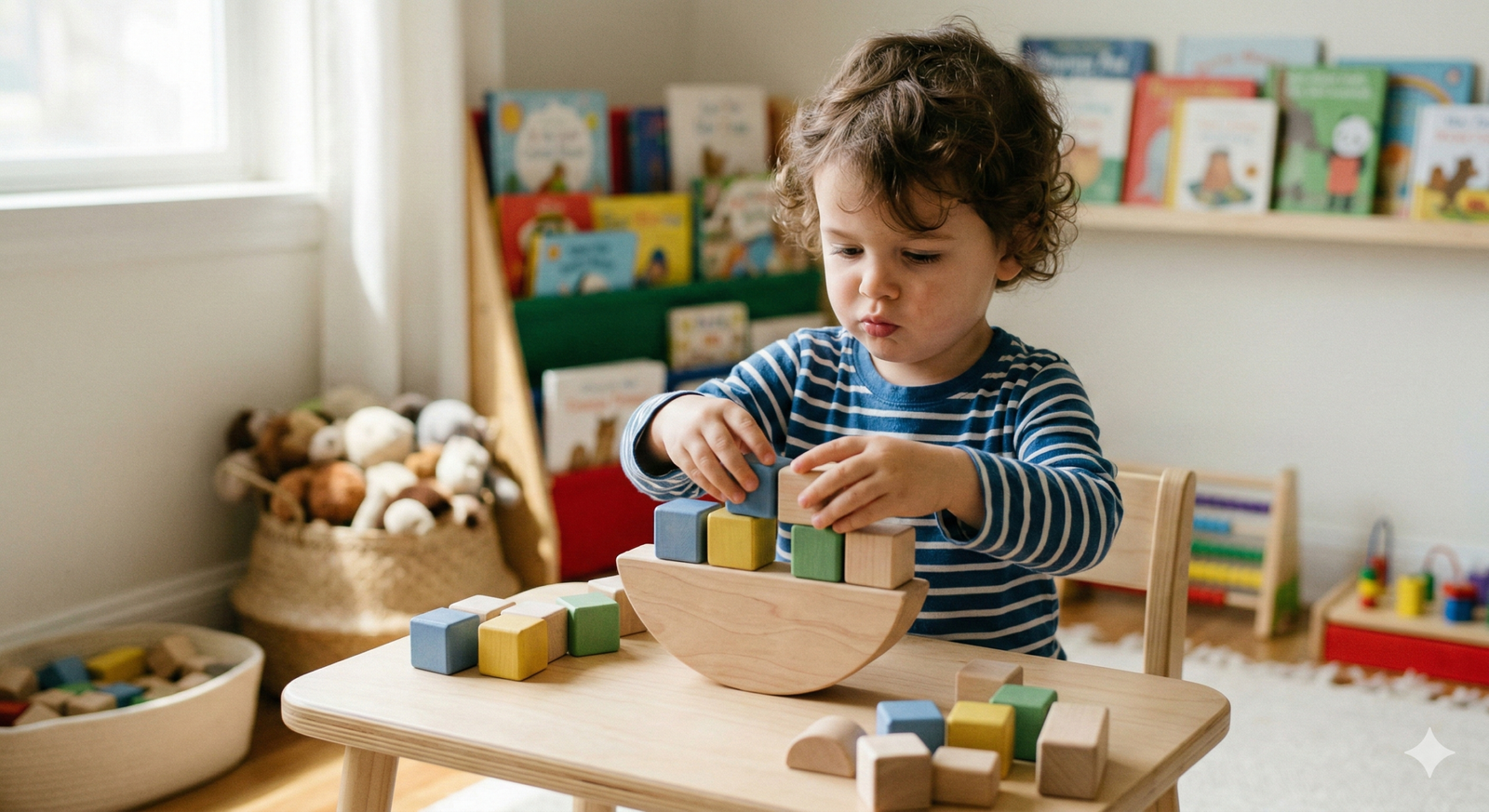
Every parent wants to give their child a meaningful head start. But toy stores are overwhelming, and most of what catches your eye has batteries, flashing lights, and a very short attention span. That’s why it’s essential to choose the best Montessori toys for toddlers.
When considering educational play, the best Montessori toys for toddlers stand out as a favorite among parents and educators alike.
Montessori toys work differently. They are simple, open-ended, and designed to meet your child exactly where they are developmentally. After fifteen years in early childhood classrooms, I have seen which toys children return to again and again, and which ones collect dust after day one.
Here are my top picks for babies and toddlers ages 0 to 3, organized by developmental stage.
This post contains affiliate links. As an Amazon Associate and member of other affiliate programs, I earn from qualifying purchases at no extra cost to you.
Get the essential checklist every parent needs before the first day of daycare. Sent straight to your inbox, free.
Get Your Free ChecklistBefore we dive in, a quick note. A toy does not need a Montessori label to be Montessori-aligned. Look for these qualities:
At this stage, your baby is becoming a confident mover and an eager explorer. Hands want to touch, sort, open, and close everything in sight. The best toys at this age are ones that respond directly to your child’s actions.
GOPO TOYS Montessori Toys for 12-18 Months Simple, well-made, and sized perfectly for small hands. GOPO TOYS consistently delivers Montessori-aligned materials that focus on cause and effect, hand-eye coordination, and independent exploration. A solid first Montessori pick. [Check price and reviews on Amazon →]
Montessori Wooden Busy Board A busy board with latches, buttons, zippers, and buckles is one of the best investments for this age group. Every activity on the board directly prepares tiny fingers for real-life skills like dressing independently, a core Montessori goal. Look for one with a variety of mechanisms to keep engagement high. [Check price and reviews on Amazon →]
TOOKYLAND Montessori Learning Educational Stacking Stacking and sorting are foundational Montessori activities at this age. TOOKYLAND makes this toy in natural tones that are easy on the eyes and satisfying to handle. The stacking action builds concentration and fine motor control simultaneously. [Check price and reviews on Amazon →]
Baby Musical Instruments Montessori Set Sound exploration is a key sensory activity for babies and young toddlers. A simple set of wooden musical instruments, shakers, bells, and drums, invites your child to explore cause and effect through sound. Choose instruments that are solid, safe, and genuinely musical rather than just noisy. [Check price and reviews on Amazon →]
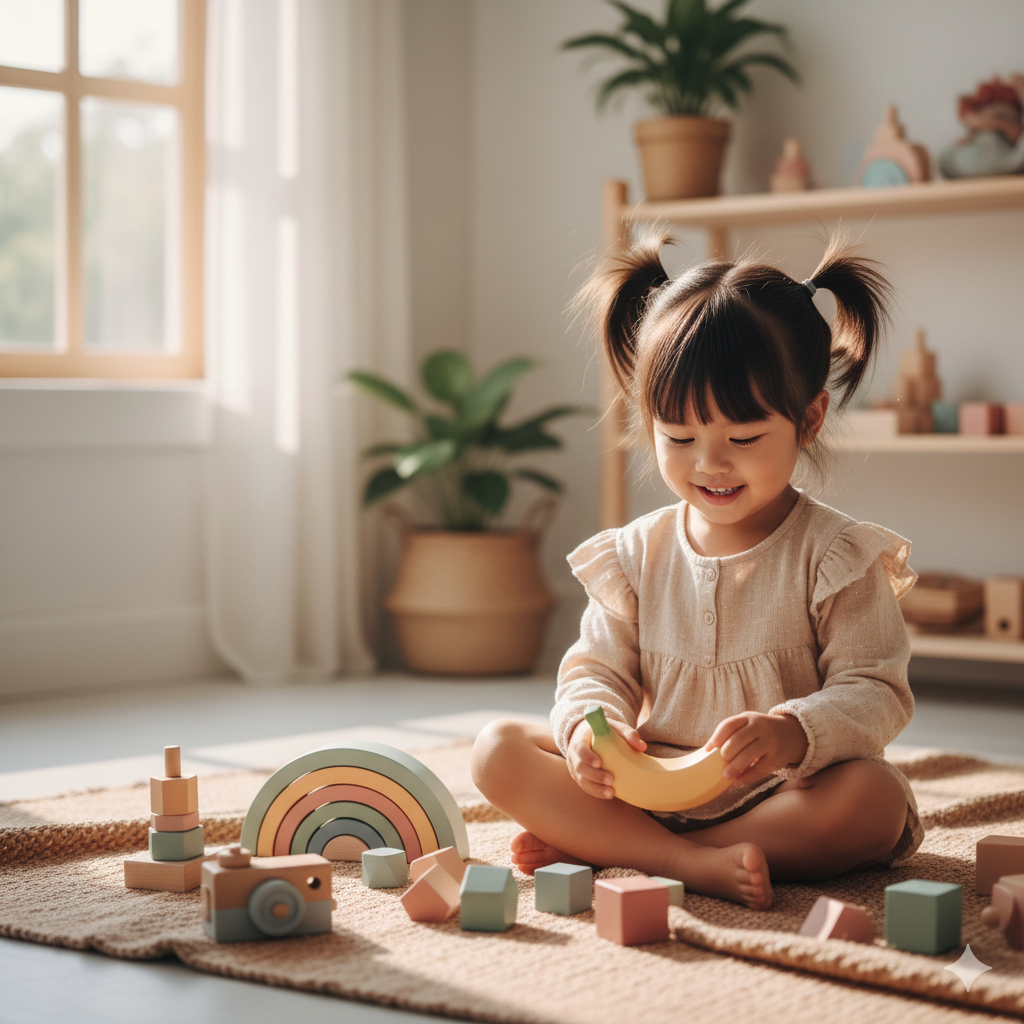
Your toddler is now walking confidently and developing a strong sense of “I do it myself.” This is the prime window for shape sorting, simple matching, and activities that require just enough challenge to build real focus.
Fisher-Price Montessori Permanence Shape Sorter Fisher-Price brought their expertise to a Montessori-aligned design here. The object permanence concept, understanding that things exist even when hidden, is a key developmental milestone at this age. A shape sorter that also teaches permanence covers two developmental areas in one simple toy. [Check price and reviews on Amazon →]
Dailyfunn Montessori Learning Matching Toy Matching activities build visual discrimination, concentration, and early logic skills. The Dailyfunn set is well-reviewed for its quality and child-friendly sizing. At this age, matching pairs is genuinely satisfying for a developing brain and encourages the kind of focused, repetitive play that Montessori celebrates. [Check price and reviews on Amazon →]
Preparing your little one for daycare too? The transition from home to a group setting is one of the biggest milestones in the toddler years. My guide Daycare Ready Without Tears walks you through every stage, from the weeks before to the first thirty days, written from fifteen years of real classroom experience. Get the guide for €12 →
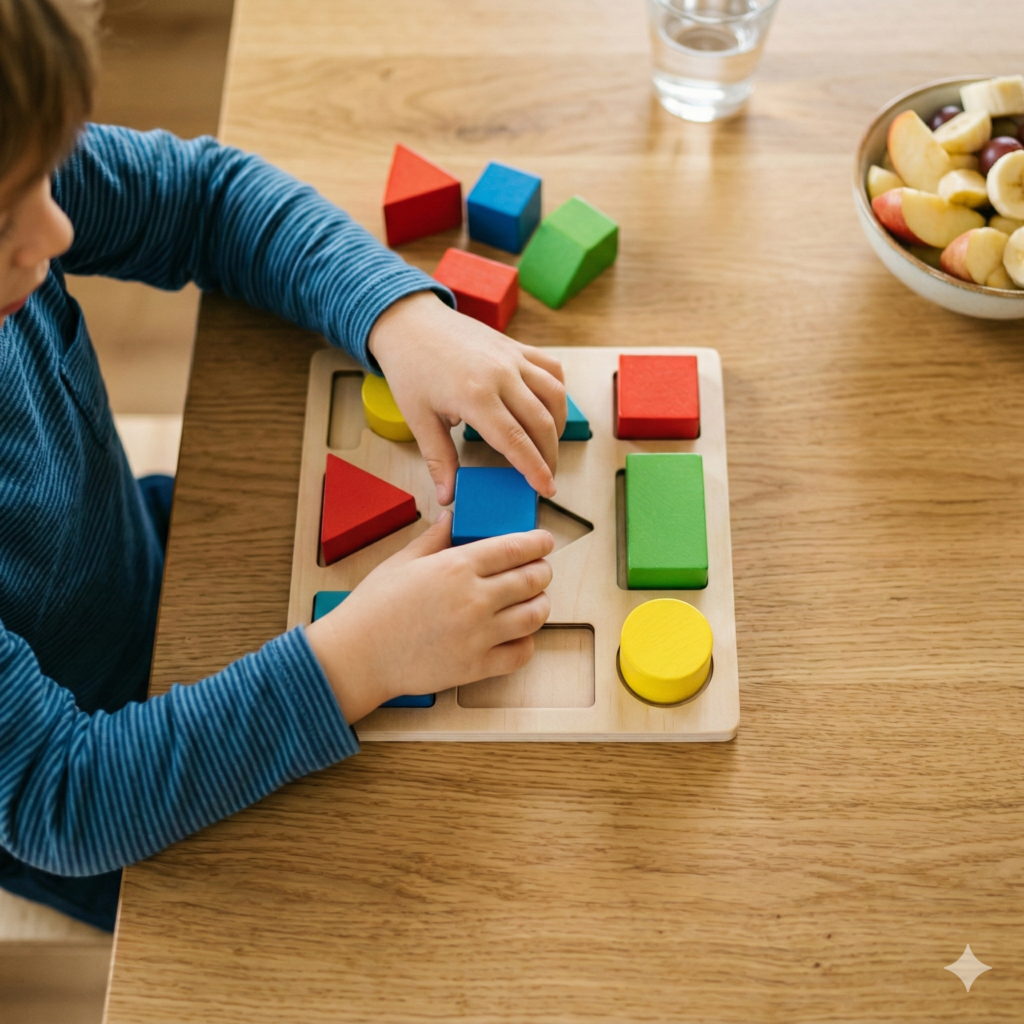
Toddlers at this stage have strong opinions, growing independence, and hands that are ready for more complex challenges. They want to sort, sequence, count, and build, and they want to do it on their own terms.
Montessori Toy Wooden Shape Sorting Puzzle A well-rounded activity set for this age covers multiple Montessori areas at once: fine motor, sorting, color recognition, and early math concepts. Look for sets that allow your child to work independently without needing adult direction for every step. [Check price and reviews on Amazon →]
Montessori Sequencing Stacking Matching Sequencing is a pre-reading and pre-math skill that develops naturally at age 2-3. This toy challenges your child to order objects by size, color, or pattern, building logical thinking without screens or instructions. [Check price and reviews on Amazon →]
Wooden Animal Chunky Puzzles The combination of stacking and puzzle-solving makes this a particularly rich toy for this age. Children work on spatial reasoning, patience, and problem-solving all at once. When a child figures out a puzzle independently, the sense of mastery it builds is exactly what Montessori learning is about. [Check price and reviews on Amazon →]
Counting Peg Board Montessori Math Early math skills begin with physical counting, not worksheets. A peg board lets children handle numbers concretely, placing pegs one by one and building a physical understanding of quantity that no flashcard can replicate. This is a classroom staple that works just as well at home. [Check price and reviews on Amazon →]
A Note From the Classroom
The most used toys in my classroom were never the most expensive ones. They were the ones children could return to independently, fail at, try again, and eventually master.
That cycle of challenge and mastery is what builds confidence, not the toy itself.
Start with one or two pieces from this list. Rotate toys rather than having everything out at once, too much choice overwhelms young children and reduces deep play. And give your child time. Real Montessori play looks slow and repetitive from the outside, and that is exactly how it should look.
Thank you for supporting my work! In this post, I am recommending toys that we truly love and use at Playful Minds Lab. As an Amazon Associate I earn from qualifying purchases.